

Incorporate a Co-operative Corporation in Canada
Incorporate your Co-operative Corporation online, anywhere in Canada with Incorp Master Canada. A Co-operative Corporation, or co-op, is a member-owned and democratically controlled business incorporated under federal, provincial, or territorial co-operative legislation, where profits are distributed to members based on participation rather than investment. Federal, provincial, and territorial co-operative corporation incorporations – fast, compliant, and 100% online. Whether you are forming a worker co-op, consumer co-op, producer co-op, housing co-op, or multi-stakeholder co-op, Incorp Master Canada makes the incorporation process simple from start to finish.
Lowest Price Guarantee – No Delays – 100% Compliance

Trusted by 500+ Entrepreneurs
Just 4 Steps to Incorporate Your Co-operative Corporation
Fast, Simple & Hassle – Free Process
01
Choose Your Jurisdiction
Select the federal, provincial, or territorial jurisdiction where your co-operative will be incorporated and where your members will operate.
02
Submit Your Details
Provide your co-operative name, member information, proposed bylaws, and business activity details.
03
We File Your Incorporation
Incorp Master Canada handles the official co-operative corporation incorporation with the relevant federal, provincial, or territorial government authority on your behalf.
04
Get Your Corporation Documents
Receive your Articles of Incorporation, Certificate of Incorporation, and co-operative registration documents quickly by email.
Choose the Right Jurisdiction and Incorporate Your Co-operative Corporation
Choose your Province and incorporate your Co-operative Corporation in minutes. Our simple online application gives you upfront pricing and everything you need.

Ontario Co-operative Corporation
Ontario Co-operative Corporation incorporation is governed under the Co-operative Corporations Act of Ontario, administered by ServiceOntario for incorporation filings and the Financial Services Regulatory Authority of Ontario (FSRA) for ongoing regulatory oversight. Ontario co-operatives can take the form of worker co-ops, consumer co-ops, producer co-ops, housing co-ops, and multi-stakeholder co-ops. The co-operative name must include the word “Co-operative” or an approved variant. Ontario is one of Canada’s most established provinces for co-operative corporation incorporation, with a large and diverse co-operative sector across multiple industries including retail, housing, agriculture, and worker-owned businesses.
Alberta Co-operative Corporation
Alberta Co-operative Corporation incorporation is governed under the Cooperatives Act of Alberta. A minimum of three individuals is required to incorporate a co-operative in Alberta. Incorporators must submit original Articles of Incorporation, a Summary of Articles, a Notice of Address, a Notice of Directors, and a statutory declaration, along with a $100 incorporation fee. The co-operative name must include the word “Co-operative” or an approved alternative such as “Association,” “Society,” “Exchange,” or “Union.” Alberta’s co-operative sector spans agriculture, energy, retail, and worker-owned enterprises, making it one of Canada’s most active provinces for co-operative incorporation.
BC Co-operative Corporation
British Columbia Co-operative Corporation incorporation is governed under the Co-operative Association Act of British Columbia, administered by BC Registry Services. In BC, a co-operative must have a minimum of three members to incorporate. The co-operative name must include the word “Co-operative” or a contracted form, and a name reservation must be completed through BC Registry Services before incorporation proceeds. BC co-operatives can be structured as limited or unlimited liability associations and cover a wide range of sectors including worker-owned businesses, housing, agricultural producers, and community-based enterprises.

Federal Co-operative Corporation
Federal Co-operative Corporation incorporation is governed under the Canada Cooperatives Act (S.C. 1998, c. 1), administered by Corporations Canada under Innovation, Science and Economic Development Canada (ISED). A federal co-operative is appropriate for organizations that intend to operate in more than one province or territory and maintain offices in multiple locations. A minimum of three persons or one or more co-operative entities is required to incorporate federally. Federal incorporation requires a NUANS name search, Articles of Incorporation (Form 3001), and a Notice of Registered Office (Form 3003). Federal co-operatives cannot carry on business as a bank, insurance company, trust company, credit union, or caisse populaire under the Canada Cooperatives Act.
Saskatchewan Co-operative Corporation
Saskatchewan Co-operative Corporation incorporation is governed under the Co-operatives Act of Saskatchewan, administered by Information Services Corporation (ISC). Saskatchewan has one of the strongest co-operative traditions in Canada, with a rich history of agricultural, consumer, and worker co-operatives dating back over a century. A minimum of three individuals is required to incorporate, though the registrar may allow variations. After incorporation, the co-operative name must include the word “Co-operative” or an approved form, and a NUANS name search must be completed prior to filing. Saskatchewan co-operatives operate across agriculture, energy, retail, and community services.

Manitoba Co-operative Corporation
Manitoba Co-operative Corporation incorporation is governed under the Cooperatives Act of Manitoba. Manitoba recognizes a wide range of co-operative types in its legislation including producer, consumer, worker, housing, financial, new generation, and multi-stakeholder co-operatives. The co-operative name must include the word “Co-operative” or an approved form. Manitoba’s Cooperatives Act places additional regulations on specific co-op types including housing co-operatives under Part 12 of the Act and multi-stakeholder co-operatives under Division 3. Manitoba has a strong and established co-operative sector, particularly in agriculture, food retail, and community services.
How Long Does It Take to Incorporate a Co-operative Corporation in Canada?

Standard

Priority
Priority: incorporated in 1 business day +$75

Rush
Express: incorporated in 2 business hours +$150

Incorporate Your Co-operative Corporation in Canada
The Member-Owned Business Structure Built for Communities and Shared Success
A Co-operative Corporation in Canada is a democratically managed business entity owned and controlled by its members, where profits and benefits are distributed based on participation rather than investment. Co-operatives are incorporated under provincial, territorial, or federal co-operative legislation and are governed by the principle of one member, one vote. They are used across a wide range of sectors including agriculture, retail, housing, worker-owned businesses, energy, and community services.
Incorp Master Canada provides fast and seamless co-operative corporation incorporation services across all Canadian provinces, territories, and at the federal level – 100% online.
Why Incorporate a Co-operative Corporation in Canada?
- Democratic governance - one member, one vote regardless of investment size
- Profits distributed to members based on participation through patronage refunds
- Limited liability protection for members under provincial and federal co-operative legislation
- Tax advantages - co-operatives can deduct patronage refunds paid to members before calculating taxable income
- Flexible structure available as worker, consumer, producer, housing, or multi-stakeholder co-op
- Strong community ownership model that supports local economic development
Incorporate your Co-operative Corporation with Incorp Master Canada. The process is fast, simple, and stress-free – 100% online, from anywhere in Canada.
Incorporate your Co-operative Corporation today and build a business owned by your community.





Why Choose Incorp Master Canada for Co-operative Corporation?
Trusted by Canadian Business Owners!
Start and grow your co-operative with confidence through fast, secure, and compliant co-operative corporation incorporation services across Canada. Incorp Master Canada’s streamlined online process makes co-operative incorporation simple for worker co-ops, consumer co-ops, producer co-ops, housing co-ops, and multi-stakeholder co-ops across all provinces and territories.
Incorp Master Canada provides fast, secure, and compliant online co-operative corporation incorporation and business filing services for co-operative organizations across Canada.


Fast & Affordable Co-operative Corporation Incorporation for Canadian Communities!
Incorp Master Canada makes co-operative incorporation quick, affordable, and stress-free for members and organizers across Canada.
What Customers Say
Customer satisfaction is our top priority. We strive to ensure a seamless and efficient business setup process. Explore our customer’s experiences with us
 Posted on Google
 Chris Conant
Trustindex verifies that the original source of the review is Google.
Always great advice, and great service.Posted on Google The Cardboard AssassinAudry and Larry were amazing to deal with. Great communication and speedy service. A++Posted on Google
 Shir ChenThanks Angela for her assisting in processing my inquiry. Very much appreciated.Posted on Google
 Sean ThompsonHe was help full with some questions I had and helping me understand on what I was doing and what should be filled out and still have the option to do so thank you LarryPosted on Google
 Evan AntonatosGreat help in setting up my corp. Was extremely lucky to have Ashleigh work my file. She was AWESOME!!!!!Posted on Google
 Habibullah ShinwariI create two business licenses on Incorpmaster , on time and I extremely recommend to all entrepreneurs. Thanks for such a nice service Jordan T. Habib shinwariPosted on Google
 Dr Gut Ancient Wellness RawjeeWahid helped me set up my company July 8th 2023, he was very helpful, I made an error by not choosing the purchase of a minute book, he spotted the error right away, it saved me a hassle in the future, he was prompt & professional. This company is awesome, I've used them for 3 company set ups and will definitely use them again and refer them highly. Thanks Incorp Master! For the best staff June 21 2026 Leona & Larry filed my annual returns, it was seemless✍️ appreciate thanks so much to both of you.

Frequently Asked Questions
Find out why IncorpMaster leads the way in our industry. Check out
our FAQs to see why weʼre your top choice for all your needs.
A Co-operative Corporation in Canada, commonly known as a co-op, is a member-owned and democratically controlled business entity incorporated under federal, provincial, or territorial co-operative legislation. Unlike a standard corporation where control is proportional to share ownership, a co-operative operates on the principle of one member, one vote, regardless of the amount invested. Co-operatives distribute profits and benefits to members based on their participation in the co-operative rather than on their level of investment. In Canada, co-operatives must incorporate under a specific Co-operatives Act at the provincial, territorial, or federal level and can take the form of worker co-ops, consumer co-ops, producer co-ops, housing co-ops, and multi-stakeholder co-ops.
The minimum number of members required to incorporate a Co-operative Corporation in Canada varies by jurisdiction. Most provinces including Ontario, British Columbia, Alberta, Saskatchewan, Manitoba, Quebec, New Brunswick, Nova Scotia, Prince Edward Island, Newfoundland and Labrador, the Northwest Territories, and Yukon require a minimum of three members to incorporate a co-operative. Nunavut requires a minimum of five members. At the federal level under the Canada Cooperatives Act, a minimum of three persons or one or more co-operative entities is required. There is no maximum number of members in any Canadian jurisdiction. Incorp Master Canada handles co-operative incorporation across all Canadian provinces and territories.
Co-operative Corporation incorporation in Canada takes as little as 30 minutes with our Rush service, 1 business day with Priority, or 3 business days with our Standard service. The Rush service is available for an additional $99 and the Priority service for an additional $150. Processing times may vary slightly by province or territory depending on the government authority and the completeness of the submitted documents including bylaws and articles of incorporation. Incorp Master Canada always works to get your co-operative incorporation completed as quickly as possible.
There are several recognized types of Co-operative Corporations in Canada. A worker co-operative is owned and controlled by its employees, who share in the profits and management of the business. A consumer co-operative is owned by its customers, who benefit from lower prices and patronage refunds. A producer co-operative is owned by producers such as farmers or fishers who share resources and infrastructure to reduce costs and access markets. A housing co-operative provides housing to its members on a collective ownership basis. A multi-stakeholder co-operative combines different member groups such as workers, consumers, and community supporters within a single co-operative structure. In Quebec, the solidarity co-operative is a recognized form of multi-stakeholder co-operative. The Canada Cooperatives Act governs all types except financial co-operatives such as credit unions and caisses populaires.
Co-operative Corporations in Canada have access to several unique tax advantages under the Income Tax Act. The most significant is the ability to deduct patronage refunds paid to members from taxable income before calculating corporate income tax. This means that a co-operative can distribute a share of its profits to members based on their participation and reduce its taxable income in the process, effectively lowering the overall tax burden at the corporate level. Worker co-operatives can also issue worker bonuses as a form of profit sharing, which increases labour costs and reduces taxable income. Co-operatives that qualify as Canadian-Controlled Private Corporations may also be eligible for the Small Business Deduction on their first $500,000 of active business income, taxed at the lower small business corporate tax rate.
The key differences between a Co-operative Corporation and a regular corporation in Canada are in governance, profit distribution, and purpose. In a regular corporation, control is proportional to share ownership and profits are distributed as dividends based on the number of shares held. In a co-operative, each member has one vote regardless of their investment, and profits are distributed based on participation through patronage refunds. Co-operatives are incorporated under dedicated Co-operative Acts rather than Business Corporations Acts and are governed by co-operative principles including democratic member control, member economic participation, and concern for community. Regular corporations are available to any type of business, while co-operatives are specifically structured around a defined membership with shared economic and social objectives.
Upon successful incorporation of your Co-operative Corporation in Canada, you will receive your official Certificate of Incorporation and Articles of Incorporation issued by the relevant provincial, territorial, or federal government authority. These documents confirm your co-operative name, incorporation number, and the details of the founding members and directors. You will also receive a federal Business Number (BN) from the Canada Revenue Agency where applicable, which is required to set up your corporate tax account. In provinces where the BN is not automatically issued at incorporation, you can register for one directly with the CRA. All documents are delivered directly to your email in digital format. You can use these documents to open a corporate bank account, apply for business licences, establish membership agreements, and begin operating your co-operative under its legally incorporated name.
Yes, bylaws are a required component of incorporating a Co-operative Corporation in most Canadian jurisdictions. Bylaws set out the internal rules of the co-operative including membership eligibility, member rights and responsibilities, meeting procedures, voting rules, board of director composition, and profit distribution policies. Some provinces such as the Northwest Territories and Nunavut provide a set of prescribed standard bylaws in their regulations, which apply automatically if the co-operative does not submit its own. In most provinces, co-operatives must draft and submit their own bylaws along with their Articles of Incorporation. Incorp Master Canada can guide you through the bylaw and documentation process to ensure your co-operative is properly and fully incorporated.
Yes, a Co-operative Corporation can operate across multiple Canadian provinces. There are two main options. The first is to incorporate provincially in your primary province of operation and then register as an extra-provincial co-operative in any additional provinces where you conduct business. The second option is to incorporate federally under the Canada Cooperatives Act, which is appropriate for co-operatives that intend to operate in more than one province or territory from the outset. A federally incorporated co-operative must maintain a registered office in Canada and is governed by Corporations Canada under ISED. Incorp Master Canada can handle both provincial and federal co-operative incorporation and multi-jurisdictional filings on your behalf.
The main disadvantages of a Co-operative Corporation in Canada relate to governance complexity and capital raising limitations. The one member, one vote principle, while democratic, can make decision-making slower and more complex than in a standard corporation where majority shareholders can act quickly. Co-operatives can also face challenges in raising capital, as they cannot offer equity shares in the same way a regular corporation can, and investor returns are limited by the co-operative model. Some provinces have more complex bylaw and reporting requirements for co-operatives compared to standard business corporations, which can increase administrative costs. Additionally, some types of co-operatives such as multi-stakeholder co-ops are not recognized or are more restricted in certain provinces, so the available structure may vary depending on your jurisdiction.
Helpful Guides for Entrepreneurs in Canada
Select the right structure for your business, learn the difference between incorporated and unincorporated business, standard and professional corporation. Check our blog for useful business tips, it’s your go-to resource for informed decisions.
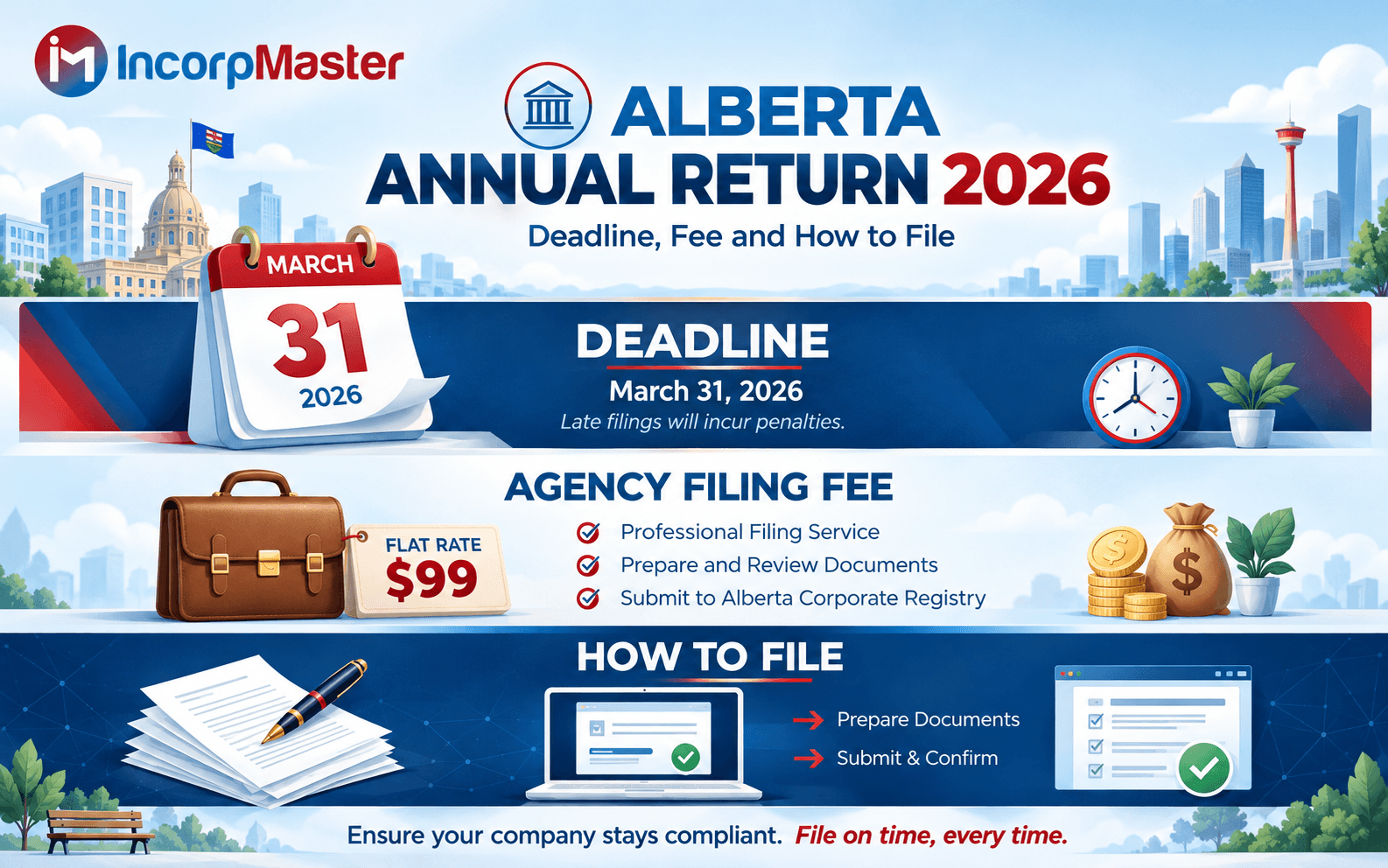
Alberta Annual Return (2026): Deadline, Fees and How to File
Incorp Master Blog Template Quick Answer An Alberta annual return is a mandatory
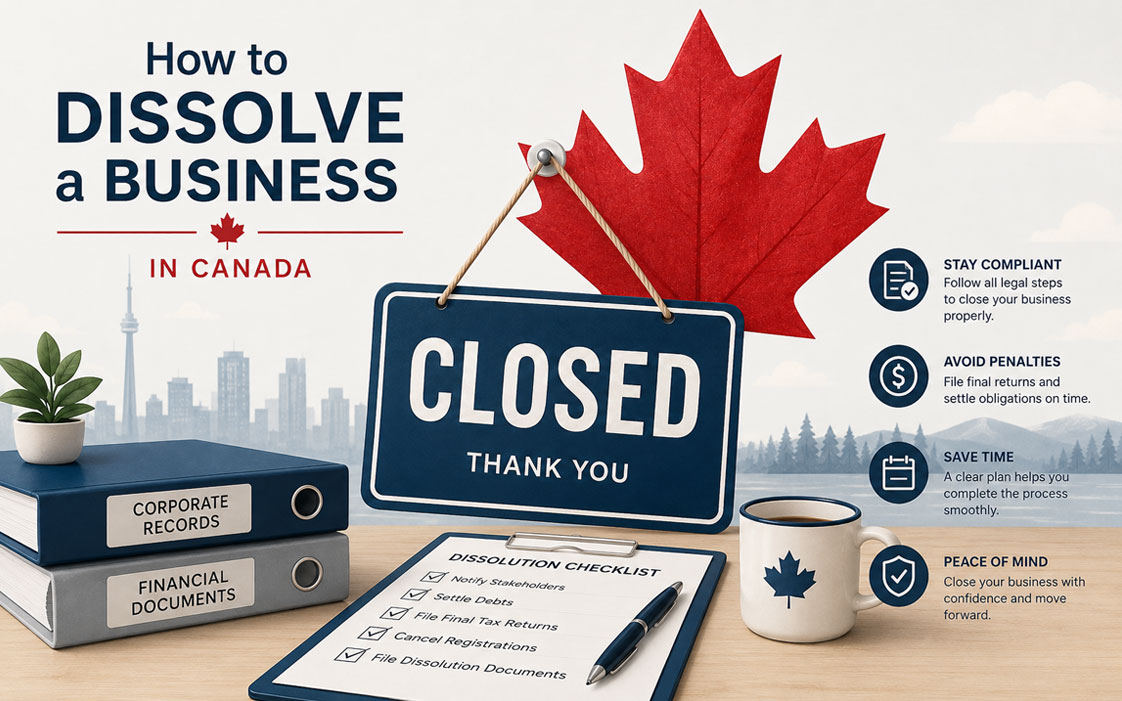
How to Dissolve a Business in Canada: A Step-by-Step Guide for Business Owners
Starting a business takes courage, hard work, and commitment. But sometimes, the right

How to Start a Freelance Graphic Design Business in Canada: Complete Guide for Small Business Owners
The demand for graphic design services continues to grow as businesses increasingly rely