
The demand for graphic design services continues to grow as businesses increasingly rely on professional branding, marketing materials, websites, and digital content. If you have creative skills and want to work independently, starting a freelance graphic design business can be an excellent opportunity.
Many successful designers begin as an Ontario sole proprietorship, allowing them to build a client base, gain experience, and establish themselves as a small business owner before considering incorporation. Whether you plan to work part-time or launch a full-time design agency, understanding the business side of freelancing is essential.
This guide explains how to start a freelance graphic design business in Canada, complete your business name registration, attract clients, and grow your business successfully.
Why Start a Freelance Graphic Design Business?
Graphic designers are needed by companies of all sizes. From logo design and social media graphics to website design and marketing campaigns, organizations regularly seek professional design services.
Starting your own graphic design business offers several advantages:
- Flexible working hours
- Ability to work remotely
- Low startup costs
- Unlimited income potential
- Opportunity to become a successful small business owner
- Freedom to choose clients and projects
Many designers start with a sole proprietorship because it is affordable, simple to establish, and requires less administration than a corporation.
Choose Your Graphic Design Niche
Many designers start their journey as a side hustle, taking on any project that comes their way—from corporate brochures to birthday party invitations. While this is fine for building initial muscle memory, scaling your business requires specialization.
When you narrow your focus, you instantly shift from a commodity designer to a specialized expert. Consider these high-demand graphic design niches:
- Brand Identity Design: Crafting complete visual systems (logos, typography, color palettes, and brand guidelines) for startups or rebranding businesses.
- UI/UX & Product Design: Designing the visual interface and user experience for mobile apps and websites.
- Packaging Design: Creating the physical exterior wrapper, box, or bottle layout for consumer packaged goods (CPG)—a highly specialized niche that combines 2D art with 3D spatial awareness.
- Motion Graphics: Animating assets for video intros, social media ads, or explanatory tech videos.
Other popular niches include:
- Logo design
- Social media graphics
- Print marketing materials
- Book and magazine layouts
Specialization can help a freelance graphic designer build authority and attract higher-paying clients.
Create a Professional Portfolio
Your portfolio is your primary sales tool. It shouldn’t just be a gallery of pretty images; it needs to show your strategic thinking and how your designs solve actual business problems.
Quality Over Quantity
Aim for 3 to 5 deep, comprehensive case studies rather than 20 isolated logo files. If you are just starting your side hustle and lack client work, invent fictional briefs. Treat a passion project with the exact same rigor as a paying client.
Structure a Case Study Like a Story
For each project in your portfolio, walk the viewer through the journey:
- The Brief: What problem did the client (or fictional brand) face?
- The Strategy: Why did you choose this specific creative direction? (Show your sketches or mood boards).
- The Execution: Display the final assets in high-resolution, real-world mockups (e.g., your packaging design on an actual bottle, your UI design on an iPhone screen).
- The Result: If it was a real project, include metrics or client quotes (e.g., “The new branding helped increase Shopify conversion rates by 15%”).
Register Your Business as a Sole Proprietorship
Many first-time entrepreneurs choose a sole proprietorship because it is one of the simplest business structures available in Canada.
A sole proprietorship allows one individual to operate a business under their own name or a registered business name. The registration process is generally straightforward and cost-effective.
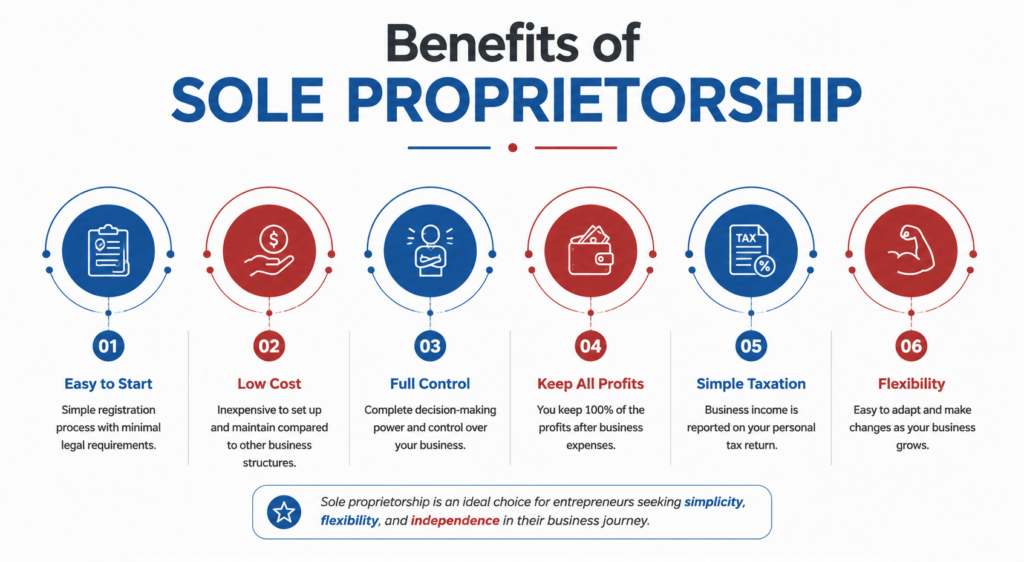
Benefits of a sole proprietorship include:
- Easy setup process
- Lower registration costs
- Minimal compliance requirements
- Complete control of business decisions
- Simplified tax reporting
A sole proprietorship is often the preferred option for a new freelance graphic designer who wants to test the market before expanding.
As your client base grows, your sole proprietorship can later be converted into a corporation if needed. If you feel that registering a business sounds a bit overwhelming, contact a professional business registry like IncorpMaster Canada, and our professional filing agents will do everything for you.
Why Many Freelancers Choose a Sole Proprietorship
A sole proprietorship is particularly attractive to creative professionals because it allows them to start earning income quickly.
With a sole proprietorship, you can:
- Legally operate your business
- Open a business bank account
- Invoice clients professionally
- Build business credit
- Establish your brand
For many entrepreneurs, business name registration serves as the first step toward becoming a successful small business owner.
Because a sole proprietorship requires fewer administrative obligations than a corporation, many designers find it easier to focus on serving clients and growing revenue.
Develop a Business Plan
Before launching your freelance graphic design business, create a simple business plan to outline your goals, services, and growth strategy.
| Business Plan Element | Description |
|---|---|
| Business Structure | Start as a sole proprietorship or corporation. Many new designers choose a sole proprietorship due to its simplicity and low cost. |
| Target Market | Focus on startups, small businesses, non-profits, or e-commerce companies. |
| Services Offered | Logo design, branding, social media graphics, website graphics, and marketing materials. |
| Pricing Strategy | Charge hourly rates, project fees, or monthly retainers. |
| Marketing Plan | Use SEO, social media, networking, referrals, and a professional portfolio website. |
| Financial Goals | Set monthly and annual revenue targets and track expenses. |
| Growth Plan | Expand services, increase rates, and consider moving from a sole proprietorship to a corporation as your business grows. |
A clear business plan helps every small business owner stay focused, attract clients, and build a successful graphic design business.
Set Competitive Graphic Design Rates
Pricing is one of the biggest challenges for a new freelance graphic designer.
Factors that influence pricing include:
- Experience level
- Industry expertise
- Project complexity
- Market demand
- Client budget
Avoid underpricing your services. As a small business owner, your rates must cover:
- Software subscriptions
- Equipment expenses
- Marketing costs
- Taxes
- Professional development
Research industry standards and adjust your pricing as your experience grows.
Build an Online Presence
A strong online presence helps attract potential clients.
Your website should include:
- Portfolio samples
- Service descriptions
- Testimonials
- Contact information
- About page
You should also maintain professional profiles on platforms such as:
- Behance
- Dribbble
Consistent branding helps establish trust and credibility.
Find Clients for Your Graphic Design Business
Client acquisition is essential for long-term success.
Common methods include:
Networking
Attend:
- Business events
- Entrepreneur meetups
- Industry conferences
- Chamber of Commerce events
Referrals
Satisfied clients can become your most valuable marketing channel.
Content Marketing
Publish:
- Design tips
- Branding advice
- Industry insights
- Case studies
Search Engine Optimization
SEO can help your graphic design business appear in search results when businesses need design services.
Understand GST/HST Requirements
As your business grows, you may need to register for GST/HST.
Many small business owners start below the registration threshold, but once revenue exceeds government requirements, registration may become mandatory.
Understanding tax obligations early can help avoid compliance issues later.
Protect Your Business with Contracts
Every freelance graphic designer should use written agreements.
Contracts should address:
- Scope of work
- Payment terms
- Revision limits
- Project deadlines
- Ownership rights
- Cancellation policies
Professional contracts reduce misunderstandings and help protect your business interests.
Manage Your Finances Like a Small Business Owner
Successful freelancers treat their operations like a real business.
Important financial practices include:
- Tracking expenses
- Maintaining records
- Separating business and personal finances
- Creating invoices promptly
- Setting aside tax funds
Whether you operate as a sole proprietorship or eventually incorporate, a financial organization is critical.
When Should a Sole Proprietorship Incorporate?
Many entrepreneurs begin with a sole proprietorship and later transition to a corporation.
You may consider incorporation when:
- Revenue increases significantly
- Liability concerns grow
- You hire employees
- Tax planning becomes important
- You want to expand operations
A sole proprietorship works well for many freelancers, but incorporation may provide advantages as the business evolves. To better understand the difference between incorporated and unincorporated businesses, you can check this article.
Grow Your Graphic Design Business
Once your business becomes established, focus on growth opportunities:
- Increase service offerings
- Raise prices strategically
- Hire subcontractors
- Develop recurring revenue streams
- Expand into new industries
The most successful small business owners continuously invest in their skills, marketing, and client relationships.
Frequently Asked Questions About Starting a Freelance Graphic Design Business
Do I need to register a sole proprietorship to start a freelance graphic design business in Canada?
If you operate your graphic design business under a name other than your personal legal name, you will generally need to register a sole proprietorship. Registering a sole proprietorship allows you to legally operate your business, open a business bank account, and present a professional image to clients.
Is a sole proprietorship the best business structure for a freelance graphic designer?
For many new entrepreneurs, a sole proprietorship is the most affordable and straightforward business structure. A sole proprietorship is easy to establish, requires minimal ongoing administration, and is often the preferred choice for a first-time small business owner.
How much does it cost to start a freelance graphic design business?
Startup costs vary depending on your equipment and software needs. Many freelance graphic designers can start with a computer, design software, internet access, and a registered sole proprietorship. Additional expenses may include website development, marketing, and professional memberships.
Can I operate a graphic design business from home?
Yes. Many freelance graphic designers operate successful home-based businesses. Working from home can reduce overhead expenses and provide flexibility while building your client base.
Do freelance graphic designers need a business licence in Canada?
Requirements vary by province and municipality. While registering a sole proprietorship may be necessary, some municipalities may also require a local business licence. It is important to verify the requirements in your area.
How do freelance graphic designers find clients?
Freelance graphic designers often find clients through referrals, networking events, social media, search engine optimization, freelance platforms, and professional portfolio websites. Building strong client relationships can also generate repeat business and referrals.
How much can a freelance graphic designer earn in Canada?
Income varies based on experience, specialization, location, and client demand. Many established freelance graphic designers earn significantly more than entry-level designers by developing expertise and building a strong client base.
Should I charge hourly rates or fixed project fees?
Both pricing models can be effective. Hourly rates work well for ongoing projects, while fixed pricing may be more suitable for logo design, branding packages, and website design projects. Many successful small business owners use a combination of both approaches.
Do I need a website for my graphic design business?
A professional website is highly recommended. It serves as an online portfolio, showcases your services, and helps potential clients learn more about your business. A website can also improve your visibility in search engine results.
What should be included in a graphic design portfolio?
A strong portfolio should include examples of your best work, such as logos, branding projects, marketing materials, website designs, packaging designs, and social media graphics. Include project descriptions that explain your design process and results.
When do I need to register for GST/HST?
If your total taxable revenue exceeds the government threshold, GST/HST registration may become mandatory. Many small business owners choose to register voluntarily before reaching the threshold to claim input tax credits.
Can a freelance graphic designer hire subcontractors?
Yes. As your graphic design business grows, you may choose to hire subcontractors or collaborate with other professionals such as web developers, copywriters, photographers, or marketing specialists.
What expenses can a freelance graphic designer claim?
Common business expenses may include design software subscriptions, office supplies, website hosting, advertising, professional development, internet services, and certain home office expenses. Maintaining accurate records is essential.
Should I incorporate or remain a sole proprietorship?
Many entrepreneurs begin with a sole proprietorship and later incorporate as revenue and business complexity increase. A sole proprietorship is often ideal during the startup phase, while incorporation may provide additional tax planning opportunities and liability protection as the business grows.
What are the benefits of being a small business owner in the graphic design industry?
Becoming a small business owner allows you to set your own schedule, choose your clients, control your pricing, and build a business around your creative strengths. Many graphic designers enjoy the flexibility and growth potential that comes with owning their own business.
Final Thoughts
Starting a freelance graphic design business can be a rewarding way to transform your creative abilities into a profitable career. Many designers begin as sole proprietors because a business name registration provides an affordable and straightforward path to becoming a small business owner.
By building a professional portfolio, registering your business name, marketing your services effectively, and delivering exceptional work, you can create a sustainable graphic design business that continues to grow for years to come.