
Running a business in British Columbia can feel a little like hiking Grouse Mountain while carrying a backpack full of receipts. Between GST, payroll deductions, write-offs, and corporate taxes, many entrepreneurs end up asking the same question:
“Is there a legal way to keep more of my money?”
Absolutely.
Whether you’re a freelancer in Vancouver, a contractor in Surrey, or launching the next tech startup in Victoria, there are plenty of smart and completely legal ways to incorporate in BC and reduce taxes. The key is understanding how the system works before tax season sneaks up on you like a raccoon stealing fries at English Bay.
In this guide, we’ll cover practical tax-saving strategies for entrepreneurs and small business owners in British Columbia — in plain English, with real examples.
Why Tax Planning Matters in British Columbia
British Columbia is one of Canada’s most entrepreneurial provinces. From e-commerce stores and digital agencies to construction companies and coffee shops, thousands of businesses launch here every year.
But many new entrepreneurs make the same mistake when they incorporate in BC:
They focus on making money… but forget about keeping it.
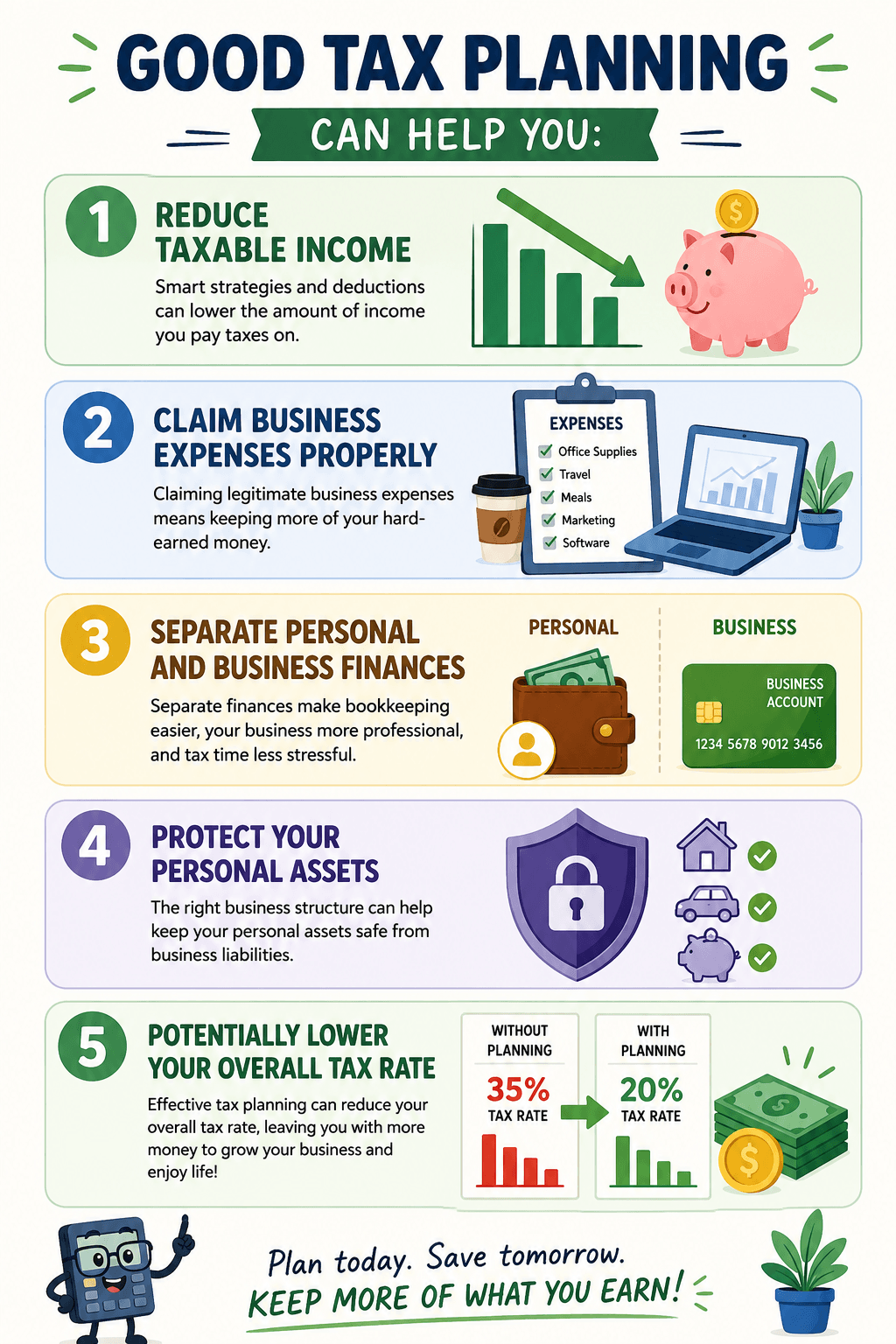
Good tax planning can help you:
- Reduce taxable income
- Claim business expenses properly
- Separate personal and business finances
- Protect your personal assets
- Potentially lower your overall tax rate
And yes, sometimes the best tax strategy starts when you decide to start a business in BC the right way.
Sole Proprietorship vs Corporation in BC
One of the biggest tax decisions you’ll make is choosing your business structure.
Sole Proprietorship
A sole proprietorship is simple and inexpensive to start. However, your business income gets added directly to your personal income.
That means if your business earns more money, you could jump into a higher tax bracket faster than you can say “CRA audit.”
Pros
- Easy setup
- Lower startup costs
- Less paperwork
Cons
- Personal liability
- Higher personal tax exposure
- Harder to scale
Corporation
Many entrepreneurs choose to incorporate in BC because corporations can offer tax advantages and liability protection.
A corporation is treated as a separate legal entity, which means business profits can often be taxed at lower corporate tax rates compared to personal income tax rates.
Benefits of BC Incorporation
Choosing BC incorporation may help you:
- Access lower small business tax rates
- Leave money inside the corporation
- Split income strategically
- Build business credibility
- Protect personal assets
Plus, “CEO” sounds cooler than “guy working from laptop at kitchen table.”
Small Business Tax Rates in BC
Canadian-Controlled Private Corporations (CCPCs) in British Columbia may qualify for the small business deduction.
This can significantly reduce the tax rate on the first portion of active business income. For many small business owners, incorporation can create substantial long-term savings — especially once annual profits begin growing consistently.
Claim Every Legitimate Business Expense
Here’s a painful truth:
Many business owners, once they incorporate in BC, overpay taxes simply because they forget to claim expenses. If the expense was incurred to earn business income, there’s a good chance at least part of it may be deductible.
Common Tax Write-Offs in British Columbia
Home Office Expenses
If you work from home, you may deduct:
- Internet
- Utilities
- Rent or mortgage interest
- Home insurance
- Office supplies
Just don’t try claiming your entire living room because your laptop touched the couch once.
Vehicle Expenses
If you use your car for business purposes, you may deduct:
- Fuel
- Insurance
- Repairs
- Maintenance
- Lease payments
- Parking
Keep a mileage log. The CRA loves documentation almost as much as British Columbians love hiking.
Phone and Internet
Your business portion of:
- Cell phone bills
- Internet costs
- Software subscriptions
may qualify as deductible expenses.
Marketing and Advertising
This includes:
- Website development
- Social media ads
- Google Ads
- Business cards
- Branding materials
Good marketing brings customers.
Good bookkeeping prevents headaches.
Keep Personal and Business Finances Separate
Using one bank account for everything is a classic entrepreneur move. Unfortunately, it’s also a bookkeeping nightmare.
Why Separate Accounts Matter
Separate accounts help:
- Track expenses accurately
- Simplify tax filing
- Reduce accounting errors
- Improve professionalism
It also prevents awkward moments where your accountant asks why “late-night sushi” was categorized as office supplies.
Register for GST/HST at the Right Time
In Canada, businesses generally must register for GST/HST once revenue exceeds $30,000.
Some entrepreneurs voluntarily register earlier.
Why Early GST Registration Can Help
Registering early may allow you to claim Input Tax Credits (ITCs) on business expenses.
This means you could recover GST/HST paid on:
- Equipment
- Software
- Supplies
- Marketing costs
Translation:
The government might actually give some money back for once.
Pay Family Members Legitimately
If family members genuinely help your business, paying them reasonable compensation may create tax advantages.
Examples include:
- Administrative support
- Social media management
- Bookkeeping assistance
- Customer service
The key word is “reasonable.” Paying your golden retriever as “Chief Barketing Officer” probably won’t survive a CRA review.
Invest in Retirement Planning
Many business owners forget about retirement because they’re too busy answering emails at 11:42 PM. But retirement planning can also reduce taxes.
RRSP Contributions
Contributing to an RRSP may:
- Reduce taxable income
- Grow investments tax-deferred
- Improve long-term financial security
It’s basically future-you sending present-you a thank-you card.
Use Capital Cost Allowance (CCA)
Large business purchases usually cannot be deducted all at once. Instead, they may qualify for depreciation through Capital Cost Allowance.
Items That May Qualify
- Computers
- Office furniture
- Equipment
- Vehicles
This helps spread deductions over multiple years. Not exciting dinner conversation…but extremely useful for tax planning.
Hire a Professional Accountant
Could you do your own accounting? Sure. Could you also cut your own hair? Technically yes.
Should you? That’s another discussion.
A qualified accountant can help:
- Identify deductions
- Reduce tax exposure
- Ensure CRA compliance
- Create tax strategies
- Avoid costly mistakes
Professional advice often pays for itself when you incorporate in BC.
Example: Registering a Corporation in British Columbia
Let’s say Sarah runs a digital marketing business in Vancouver.
At first, she operated as a sole proprietor earning about $40,000 annually. But after a few successful contracts, her income increased to $120,000 per year.
Sarah decided to incorporate in BC to improve tax efficiency and protect her personal assets.
Here’s What She Did
Step 1: Choose a Business Name
She selected:
“Pacific Peak Digital Inc.”
Before registering, she completed a name approval request to ensure the name was available.
Step 2: Incorporate the Company
Sarah filed incorporation documents with the province and officially created her BC corporation. Her corporation became a separate legal entity.
Step 3: Register CRA Accounts
After you incorporate in BC, register the CRA accounts:
- Corporate tax account
- GST/HST account
- Payroll account
Step 4: Open a Business Bank Account
This helped separate personal and business finances when you incorporate in BC.
Step 5: Start Tax Planning
With professional accounting support, Sarah began:
- Deducting eligible business expenses
- Leaving some profits inside the corporation
- Paying herself strategically
The result?
Better financial organization, legal protection, and potential tax savings. Also, slightly less panic during tax season.
Smart Tax Habits for BC Entrepreneurs
Track Expenses Year-Round
- Waiting until April to organize receipts is like trying to build IKEA furniture without instructions.
- Use accounting software or bookkeeping apps consistently when you incorporate in BC.
Save for Taxes Monthly
- A good habit is setting aside a percentage of revenue for taxes every month.
- That way, tax season feels less like a horror movie.
Keep Digital Copies of Receipts
- The CRA accepts digital records in many cases.
- Cloud storage can become your best friend.
Review Your Business Structure Annually
- As your business grows, your tax strategy should evolve too.
- What worked at $20,000 revenue may not work at $200,000.
Common Tax Mistakes in British Columbia
Mixing Personal and Business Expenses
This creates bookkeeping chaos and potential CRA issues.
Forgetting GST/HST Obligations
Late registration penalties are not fun. At all. Register for GST right after you incorporate in BC.
Missing Expense Deductions
Small expenses add up quickly over the year after you incorporate in BC first.
Ignoring Professional Advice
DIY tax planning sometimes becomes “expensive learning experience planning.”
Final Thoughts
Saving money on taxes in British Columbia isn’t about secret loopholes or complicated schemes.
It’s about:
- Choosing the right business structure
- Tracking expenses properly
- Planning ahead
- Using available deductions
- Getting professional guidance
For many entrepreneurs, the journey begins when they decide to formally structure their company and incorporate in BC properly.
Because the less money wasted on unnecessary taxes – the more money you can invest back into your business, your future, or perhaps a very deserved vacation somewhere without Wi-Fi.
FAQ: Saving on Taxes in British Columbia
Do corporations pay less tax in BC?
In many cases, yes. Small business corporations may qualify for lower corporate tax rates compared to personal income tax rates.
Can I deduct home office expenses?
Yes. Once you incorporate in BC, if part of your home is used for business purposes, you may qualify to deduct certain expenses proportionally.
When should I incorporate in BC?
Many entrepreneurs consider incorporation once profits become more substantial, liability risks increase, or long-term growth is planned.
Is GST registration mandatory in BC?
Generally, businesses must register once annual taxable revenue exceeds $30,000.
Can I deduct my vehicle expenses?
Yes, if the vehicle is used for business purposes. Keep detailed mileage records and receipts.
What is the biggest tax-saving tip for entrepreneurs?
Good bookkeeping. Seriously. The fanciest tax strategy in the world won’t help if your receipts are hiding in random jacket pockets and your bookkeeping system is “mental notes.